Successfully securing a Curaçao iGaming licence is an important step for an online gaming business, but licence approval does not relieve the operator of its regulatory responsibilities.
A licence holder must continue to comply with the National Ordinance on Games of Chance (the LOK), the conditions attached to its licence, and the policies and instructions issued by the Curaçao Gaming Authority (CGA).
Serious or repeated failures may result in regulatory measures, financial penalties, licence suspension, or licence revocation.
This article explains why a Curaçao iGaming licence may be at risk, how the regulator may respond to non-compliance, and what operators can do to protect their licensed status.
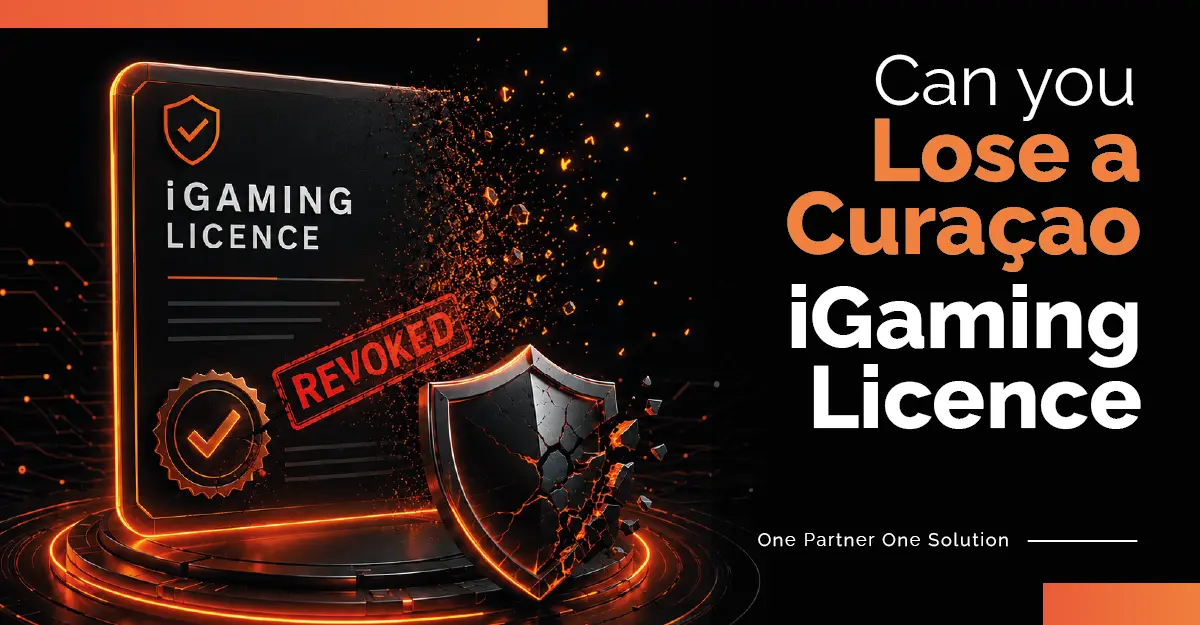
Can the Curaçao Gaming Authority revoke a Licence?
Yes. A Curaçao iGaming licence can be suspended or revoked where the operator no longer meets the applicable legal and regulatory requirements.
A definitive gaming licence may be issued for an indefinite period, but this does not mean that the licence is permanent or unconditional. The CGA confirms that an indefinite licence remains subject to possible suspension or revocation in the circumstances set out by law.
Licence holders must comply with:
- The LOK
- Their licence conditions
- CGA policies and guidelines
- AML and counter-terrorist financing obligations
- Reporting requirements
- Responsible gaming standards
- Information security requirements
- Applicable laws in the markets where they operate
Failure to meet these obligations may result in administrative measures, including fines and licence revocation.
What can put a Curaçao iGaming Licence at risk?
The CGA may review a licence holder where its conduct, ownership, financial position, or operating model no longer meets the required standards.
The following issues can increase the risk of regulatory action.
1. Breaching Licence Conditions
Every gaming licence includes conditions that define the activities the operator may carry out and the standards it must maintain.
An operator may place its licence at risk if it:
- Offers activities outside the scope of its licence
- Uses unapproved websites or platforms
- Fails to follow CGA instructions
- Operates through an unauthorised structure
- Allows another business to use its licence
- Makes material changes without approval
Licence holders should regularly review their operating model and confirm that their actual activities remain consistent with the information approved by the regulator.
2. Failing to maintain AML and KYC controls
Licensed operators must maintain suitable systems for anti-money laundering, customer identification, transaction monitoring, sanctions screening, and suspicious activity reporting.
Weak AML and KYC controls may expose the business to:
- Money laundering risk
- Fraud
- Unverified player activity
- Sanctions breaches
- Unexplained financial transactions
- Regulatory reporting failures
A written AML policy is not enough on its own. The operator must apply the policy in practice, maintain records, and review its controls as the business develops.
3. Failing to protect players
Player protection is a core objective of the Curaçao licensing framework.
The CGA expects gaming activities to be safe, responsible, transparent, verifiable, and reliable. The regulatory framework also focuses on protecting minors, vulnerable persons, player funds, and the payment of winnings.
A licence may be placed at risk where an operator:
- Allows underage gambling
- Fails to identify vulnerable players
- Does not apply responsible gaming controls
- Delays or refuses legitimate player withdrawals
- Uses unfair terms
- Fails to handle complaints properly
- Does not provide access to an approved dispute resolution process
Player complaints can also reveal wider compliance failures. Operators should therefore treat complaints as a regulatory issue rather than a customer service issue alone.
4. Providing false or incomplete information
Licence holders must provide accurate and timely information to the CGA.
False, misleading, incomplete, or inconsistent information may affect the regulator’s confidence in the operator and the individuals behind the business.
This risk can arise where an operator fails to disclose:
- A change in beneficial ownership
- A new shareholder or director
- A change in control
- Criminal or regulatory history
- Changes to the business model
- New websites or brands
- Important financial difficulties
- Material incidents
The CGA licence conditions also require prior approval for certain critical changes, including changes to ultimate beneficial owners, qualified interest holders, directors, key persons, services, and constitutional documents.
5. Failing to submit regulatory reports
Licence holders may be required to submit periodic reports, incident reports, change reports, and other information requested by the CGA.
The regulator may also request policies, operational records, system reports, or independent assessments.
Under published licence conditions, certain incidents must be reported within 24 hours.
Failure to report an incident can make the original issue more serious because the operator may face questions about both the incident and the failure to disclose it.
6. Financial instability
An iGaming operator must have sufficient financial resources to operate responsibly and meet its obligations to players and business partners.
Financial concerns may arise where the operator:
- Cannot pay player winnings
- Has unpaid regulatory fees
- Has unpaid taxes or social security obligations
- Misuses player funds
- Has unexplained sources of capital
- Faces serious liquidity problems
- Leaves creditors or players unpaid
The CGA considers financial stability and the operator’s ability to pay player winnings as part of the licensing framework.
Financial problems should be addressed early. Delayed action may turn a commercial problem into a regulatory problem.
7. Unapproved changes to ownership or management
A licence is granted after the regulator reviews the company, its beneficial owners, directors, shareholders, and key persons.
The licence holder should not assume that it can change these individuals without regulatory involvement.
A new shareholder, director, UBO, compliance officer, or key decision-maker may need to undergo due diligence and receive CGA approval.
Completing the corporate transaction before obtaining the required consent may lead to regulatory concerns and delay the approval process.
8. Operating in restricted markets
A Curaçao licence does not automatically permit an operator to target players in every country.
Licence holders must comply with the laws of the jurisdictions where they offer their services. Published CGA licence conditions require licence holders to comply with the laws and regulations of the countries in which they operate.
An operator may face increased regulatory risk if it:
- Targets prohibited markets
- Accepts players from restricted jurisdictions
- Ignores local licensing rules
- Uses misleading advertising
- Works with unlawful affiliates
- Continues operating after receiving a local warning
Market access should form part of the operator’s legal and compliance review before launch.
9. Weak Oversight of Third-Party Providers
Operators often rely on payment processors, software suppliers, game providers, affiliates, customer support teams, and compliance providers.
Outsourcing does not remove the licence holder’s responsibility.
The operator must maintain oversight of third parties and ensure that outsourced activities comply with applicable legal and regulatory standards.
Contracts should clearly define:
- Compliance responsibilities
- Data access
- Reporting obligations
- Audit rights
- Incident notification
- Player protection requirements
- Termination rights
A third-party failure can still create regulatory consequences for the licensed operator.
Does every breach lead to licence revocation?
No. The regulatory response will usually depend on the nature, seriousness, duration, and impact of the breach.
The CGA may consider factors such as:
- The seriousness of the violation
- The number of players affected
- The financial impact
- The operator’s compliance history
- The level of cooperation
- The speed of corrective action
- Whether the breach was deliberate
- Whether the operator reported the issue voluntarily
Possible outcomes may include:
- A request for information
- A regulatory review
- Corrective action requirements
- Additional licence conditions
- Increased reporting
- An administrative fine
- Suspension
- Revocation
Operators should not wait for a formal enforcement measure before correcting a known compliance issue.
What happens after a licence is revoked?
Licence revocation does not allow an operator to close its systems without addressing players, funds, contracts, and regulatory obligations.
In July 2026, the CGA published instructions on the orderly wind-down of licensed operations. These instructions apply to both B2C online gaming licence holders and B2B supplier licence holders.
Where revocation follows enforcement action, the operator may be required to:
- Stop using the CGA licence seal immediately
- Stop accepting new business
- Stop accepting new players
- Prevent existing players from placing further wagers
- Submit a formal wind-down report
- Address player balances and outstanding claims
- Settle amounts owed to the CGA or the Government of Curaçao
The CGA also states that outstanding player claims and other debts must be handled properly and may remain enforceable after the wind-down period.
How can operators protect their Curaçao iGaming Licence?
Operators can reduce regulatory risk by treating compliance as a continuing business function.
Practical steps include:
- Reviewing licence conditions regularly
- Keeping corporate and UBO information current
- Obtaining approval before material changes
- Maintaining effective AML and KYC controls
- Monitoring restricted markets
- Protecting player funds
- Reporting incidents on time
- Reviewing third-party providers
- Maintaining accurate accounting records
- Testing responsible gaming procedures
- Responding promptly to CGA requests
- Documenting all compliance decisions
Internal compliance reviews can also help operators identify weaknesses before they develop into enforcement issues.
Why early legal support matters
Licence problems often begin with an issue that appears minor, such as an unreported corporate change, an outdated policy, a new website, or a delayed regulatory filing.
These issues can become more serious if the operator does not respond properly or cannot provide accurate supporting records.
Legal and regulatory support can help the business:
- Assess the seriousness of the issue
- Communicate with the CGA
- Prepare corrective action
- Update policies and records
- Manage ownership changes
- Review market access
- Respond to information requests
- Prepare for a regulatory inspection
- Plan an orderly wind-down where necessary
Protecting your Curaçao iGaming Licence
A Curaçao iGaming licence can support long-term international operations, but the licence remains dependent on continued compliance.
Operators must maintain accurate corporate records, effective compliance systems, financial stability, player protection measures, and open communication with the regulator.
At Michael Chambers & Co. B.V., we assist iGaming businesses with Curaçao licensing, corporate structuring, regulatory compliance, licence changes, and ongoing operational support. Our team helps operators identify regulatory risks early and maintain a licensing structure that reflects their actual business activities.
To discuss your Curaçao iGaming licence or ongoing compliance obligations, contact Michael Chambers & Co. B.V.
Frequently Asked Questions
-
Can the CGA suspend a Curaçao iGaming licence?
Yes. A definitive Curaçao gaming licence remains subject to possible suspension or revocation under the LOK and the applicable licence conditions.
-
Can unpaid fees affect a gaming licence?
Yes. Unpaid regulatory fees, taxes, social security obligations, and other financial liabilities may create licensing and compliance concerns.
-
Must ownership changes be reported?
Yes. Changes involving UBOs, qualified shareholders, directors, and key persons may require prior CGA approval.
-
Can an operator lose its licence because of player complaints?
A single complaint may not automatically lead to licence loss. However, complaints may lead to a regulatory review if they indicate wider failures involving withdrawals, responsible gaming, unfair terms, or player protection.
-
Does outsourcing remove the operator’s responsibility?
No. The licence holder remains responsible for ensuring that outsourced activities comply with the applicable legal and regulatory requirements.
-
What happens to players after a licence is revoked?
The operator must follow an orderly wind-down process and address player balances, claims, and other outstanding obligations in accordance with CGA instructions.
-
Can a licence holder voluntarily surrender its licence?
Yes. A B2C or B2B licence holder may request voluntary surrender, but it must provide formal notice and complete the required wind-down process.
-
Should operators report compliance problems voluntarily?
Prompt disclosure and corrective action may demonstrate cooperation. The right approach depends on the nature of the issue, the reporting requirements, and the applicable licence conditions.